
Half term is close. If handwriting is slow, tiring, or tricky to read, small changes now can make lessons feel easier before the break. This guide turns common Occupational Therapy observations into clear classroom tweaks you can try today.

We will cover the 4 P’s for faster, more comfortable writing, what to do with angled surfaces and quick warm-ups, and how to use short writing bursts well. You will also find a plain guide to the Detailed Assessment of Speed of Handwriting (DASH), how long it takes, who can deliver it, and how results can inform access arrangements. Finally, we explain when the Beery Visual-Motor Integration (VMI) adds helpful insight.
If you are in Cornwall or Devon and need term-time assessments, Waves Occupational Therapy offers clinic, school, and home appointments across Truro, Redruth, Penzance, Plymouth and nearby areas. Please mention key school dates when you enquire.
The 4 P’s that unlock smoother handwriting
Start with the basics. Most handwriting barriers shift when you tune the setup and routine.
- Posture: Aim for a 90-90-90 sit (hips-knees-ankles) with feet supported. Use a footrest or a sturdy box if feet dangle. Sit back in the chair with the tummy facing the table edge.
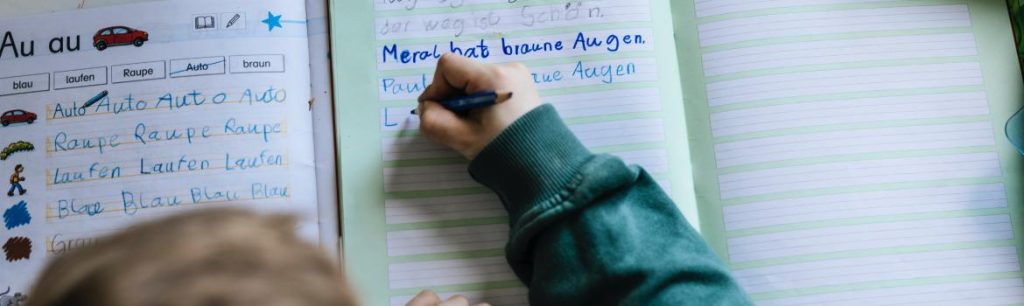
- Paper position: Right-handers tilt paper slightly left; left-handers tilt right, with the top corner higher. Keep paper centred with the writing line aligned to the body’s midline.
- Pencil grasp: Encourage a relaxed thumb-index pinch with the pencil resting on the web space. If the grip is tense, trial a shorter pencil, triangular barrel, or a small grip. Avoid white-knuckle pressure.
- Pace: Short, focused bursts beat long marathons. Use 3 to 5 minute writes with a quick stretch or movement reset before the next task.
Keep language simple. Instead of “hold it like this,” try “pinch, rest, write.” Praise comfort and control over speed at first.

Angled surfaces, quick warm-ups and short bursts
An angled surface brings the page closer to the eyes and supports a neutral wrist. A sloped board is great, but a ring binder works well in a pinch. Combine with these quick routines:
- Warm-ups: 20 wall pushes, 10 chair push-ups, slow bear walks, or squeezing a sponge. One minute is enough before writing.
- Fine-motor primers: Scrunch and smooth a small ball of Blu Tack, pick up coins with thumb and index-middle fingers, twist and untwist a jar lid.
- Short writes: Time 3 minutes of neat sentences from a model or simple dictation, then 1 minute of stretch or carry a book, then repeat. Track comfort and legibility, not just speed.
When to consider a handwriting assessment
A focused assessment helps when:
- Speed is much slower than peers or stamina collapses in class;
- Legibility breaks down under time pressure;
- Posture, grip, or paper setup look awkward despite coaching;
- Exams or mock deadlines are approaching and evidence is needed.
In clinic or school, an Occupational Therapist will observe posture, seating, paper angle, handedness, grasp, pressure, in-hand manipulation, and visual attention. Where needed, they may add standardised tools like DASH and Beery VMI.
If you need local support, you can learn more about children’s handwriting assessments in Truro and across Cornwall and Devon on our handwriting assessments page. For school-facing input and EHCP timelines, you can also explore how to request an OT assessment in Truro through our site.
Handwriting speed and the DASH
How handwriting speed is calculated:
- In everyday checks, you can time a 5 minute free writing or copying sample, count legible words, and work out words per minute. Note legibility and fatigue.
- For formal evidence, the Detailed Assessment of Speed of Handwriting (DASH) uses several timed writing tasks, scored and converted to standard scores and percentiles against age norms.
When to use DASH:
- When slow speed is suspected and you need objective, norm-referenced evidence;
- When planning access arrangements and the school needs clear data to weigh alongside classroom work and trials;
- When a student reports pain, cramp, or rapid fatigue and you want to separate speed from legibility and pressure effects.
Who can administer it and how long it takes:
- DASH should be delivered and scored by trained professionals familiar with the manual, such as Occupational Therapists or specialist teachers.
- It typically takes 30 to 45 minutes as a standalone session. Ages 9 years to 16 years 11 months are covered by DASH; older students use DASH 17+.
Interpreting results:
- Raw timings convert to standard scores and percentiles. Lower percentiles indicate slower speed relative to age peers.
- Scores show how fast; clinical observation explains why. At Waves OT, we always pair DASH with observation of posture, grip, paper angle, vision, attention and fatigue.
If you are planning term-time testing in Cornwall or Devon, you can find details on the Detailed Assessment of Speed of Handwriting in Truro on our site. Schools in the Redruth area looking to plan handwriting evidence can also read about DASH handwriting assessments in Redruth to align with review dates.
From scores to access arrangements
Schools make decisions following Joint Council for Qualifications guidance. Strong evidence blends:
- Objective data such as DASH scores;
- Classwork samples that show impact on output;
- Trial results, for example sloped board use, short writing bursts, or alternative recording.
An OT report can clarify what helps, what does not, and what to trial next. No single test guarantees an arrangement, but clear, plain-language evidence supports needs-led decisions.
When the Beery VMI helps
The Beery Visual-Motor Integration looks at how well a pupil copies increasingly complex shapes. It is helpful when:
- Letter formation is inconsistent despite good effort;
- Spacing, alignment, or copying from the board is difficult;
- You suspect visual-motor integration underpins slow, effortful writing.
VMI results sit alongside grasp, pressure, and posture observations and can guide practical targets such as shape tracing on a sloped surface, slow air-drawing, or stepwise letter construction with visual cues.
If coordination also looks tricky in PE or daily tasks, Movement ABC-2 can add useful context before you decide on targets. For local motor assessment information, see our page on Truro motor skills assessment MABC-2.
Quick classroom checklist before half term
- Feet supported, chair close, tummy to table.
- Paper tilted to match handedness, stabilised with the helper hand.
- Pencil held with a relaxed pinch and resting on the web space.
- Try a ring binder as a sloped surface for all copying tasks this week.
- Use 3 minute writes with 1 minute movement resets, twice per lesson.
- One minute of warm-ups before extended writing.
Track what changes comfort and legibility most.
FAQ
- What are the criteria for a handwriting assessment? Consider assessment when speed is notably slow, legibility drops under pressure, writing causes pain or rapid fatigue, or setup looks inefficient despite coaching. Upcoming reviews or exam deadlines are also a prompt.
- How do you calculate handwriting speed, and when should you use DASH? For a quick check, time a set writing task and divide legible words by minutes. Use DASH when you need norm-referenced evidence for school decisions or to understand speed under different writing demands.
- Who can administer DASH, and what ages is it for? Trained professionals such as Occupational Therapists and specialist teachers who know the manual can deliver and score DASH. It suits ages 9 years to 16 years 11 months, with DASH 17+ for older students.
- When is the Beery VMI helpful for handwriting? Use Beery VMI when you suspect visual-motor integration is affecting letter formation, spacing, alignment or copying. It clarifies underlying skills and guides targeted practice.
Booking in Cornwall and Devon
Waves Occupational Therapy offers handwriting, fine motor, sensory and EHCP-focused assessments across Cornwall and Devon, including Truro, Redruth, Penzance and Plymouth. Appointments are available in clinic at Threemilestone, in school, or at home depending on need. For local appointments, you can contact an Occupational Therapist in Plymouth or request an OT assessment in Truro through our website. Please include location, brief reason for referral, preferred setting, and any key school dates.
Summary and next step
Small changes to posture, paper, pencil and pace can quickly reduce fatigue and lift legibility. Use angled surfaces, quick warm-ups and short writing bursts, and record what helps. When you need clarity on speed or underlying visual-motor skills, DASH and Beery VMI add structured evidence that schools can use. If you have half term deadlines or review dates, get in touch early so your assessment and report align with school timelines. We are ready to help you turn observations into practical, classroom-ready actions.